
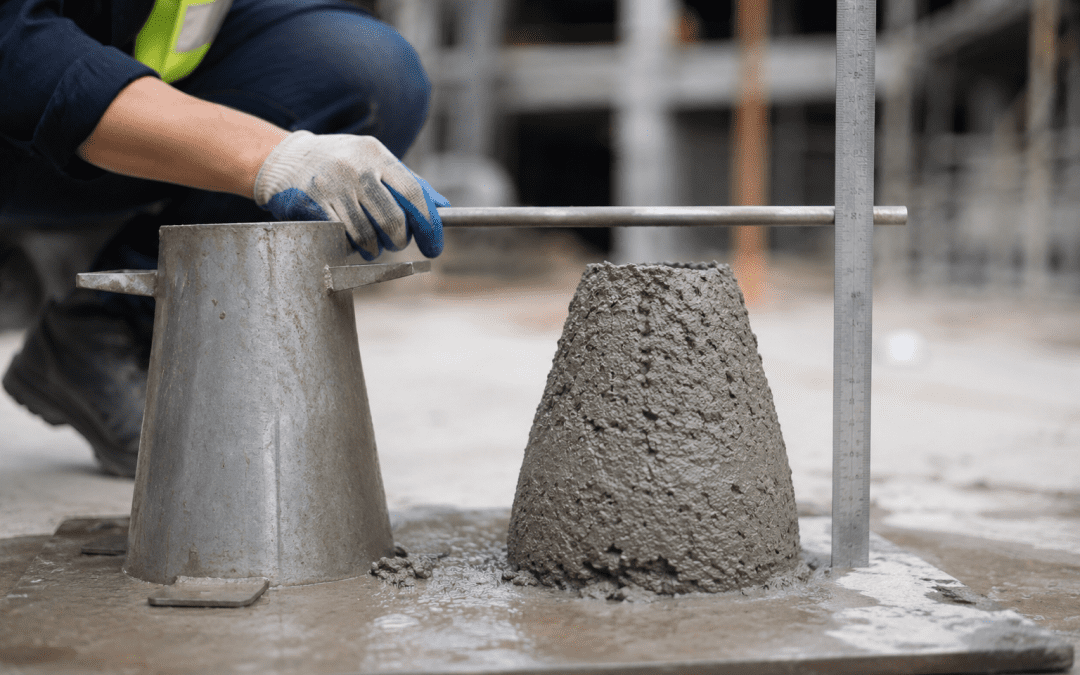
Concrete appears solid and static once cured, but its plastic phase is highly volatile and extremely sensitive to environmental and mechanical variables. The initial mixture is a complex chemical suspension of coarse aggregates, fine sands, cementitious binders, and highly precise volumes of water that must interact flawlessly. The balance of these raw ingredients dictates the final load-bearing capacity of the structural element, meaning any unauthorized deviations at the batching plant immediately alter the fundamental physics of the material. When a transit mixer arrives on a commercial site, site engineers are not simply receiving a delivery of wet stone; they are taking custody of an active, highly sensitive chemical reaction that requires immediate physical validation before it is permanently installed into the formwork.
Maintaining this exact chemical balance is the most critical operational requirement for heavy infrastructure and high-rise commercial projects. Excessive moisture introduced during the batching process severely dilutes the cement paste, artificially expanding the physical microscopic distance between aggregate particles and permanently weakening the final silicate bonds upon curing. Conversely, inadequate moisture creates extreme internal aggregate friction, preventing the mixture from flowing smoothly around dense, highly congested steel rebar reinforcements. This excessive stiffness guarantees that the poured element will suffer from dangerous, load-compromising honeycombing and hidden internal voids, which forces engineers to execute costly structural retrofits before the building can legally support its designed weight.
The margin for operational error during a high-volume commercial pour is practically zero, requiring quality control technicians to extract immediate, actionable data regarding the true fluidity of the mixture. Executing precise slump testing at the delivery point provides this exact diagnostic clarity, acting as the absolute first line of defense against catastrophic structural failure. It scientifically measures the physical resistance of the wet mix against gravitational pull, immediately revealing any unauthorized deviations in the water-cement ratio that would otherwise severely compromise the structural hydration matrix and lead to immediate load rejection by site inspectors.
Structural Science of Particle Suspension in Concrete
Concrete is not merely a wet paste; it is a highly sensitive composite material governed by strict chemical laws and complex fluid dynamics. The primary binding agent, Portland cement, requires an exact stoichiometric ratio of water to initiate the exothermic hydration reaction effectively. This aggressive chemical process grows interlocking calcium silicate hydrate (C-S-H) crystals that bind the sand and crushed stone aggregates into an impenetrable, load-bearing solid over a 28-day curing cycle. If technicians introduce excess moisture into this highly controlled environment, the water physically pushes the cement particles further apart, disrupting the crystalline growth. When the mass finally cures, these microscopic water channels evaporate entirely, leaving behind a highly porous network of structural weaknesses that drastically reduce the compressive strength and leave the steel reinforcement highly vulnerable to environmental corrosion.
Identifying the Real-World Costs of Batch Rejection
Textbook definitions often claim that moisture control simply ensures long-term strength, but the reality on a live, high-stakes construction site is far more brutal and financially severe. When contractors mistakenly pour an unverified, overly wet batch into a deep foundation column, the heavy coarse aggregates sink rapidly to the bottom of the formwork due to a complete lack of paste cohesion and viscosity. Simultaneously, a weak, watered-down layer of cement and fine sand known as laitance bleeds rapidly to the top surface, creating a highly unstable, stratified element. This severe segregation destroys the entire internal architecture of the concrete slab. When structural engineers eventually extract cured core samples and subject them to hydraulic compression analysis, this laitance layer crumbles instantly under minimal pressure, resulting in an immediate failure of the structural integrity test.
The resulting financial damage from these hidden void structures is devastating to project budgets and strict commercial timelines. Project managers are legally forced to halt all vertical progression, initiate highly disruptive secondary core drilling operations, or order the complete demolition of the defective concrete sector. The labor and equipment costs associated with utilizing robotic hydro-demolition rigs to safely remove cured concrete from around structural steel are staggering, often running into tens of thousands of dollars for a single failed column. Furthermore, supply chain delays compound rapidly as subsequent trades are locked out of the site, and heavy financial penalties from the client activate immediately.
Mitigating Risk with Immediate Diagnostics
Applying strict diagnostic protocols neutralizes this massive financial threat entirely and puts absolute control back into the hands of the project manager. Catching a severe moisture discrepancy or chemical admixture failure before the heavy-duty concrete pump engages prevents compromised, non-compliant material from ever entering the formwork. By investing five minutes into extracting a sample and measuring the physical subsidence, site engineers protect the operational budget from catastrophic blowout costs. This proactive interception keeps overhead costs strictly controlled, prevents unplanned operational downtime, and ensures that the structural engineering firm will sign off on the as-built element without requiring expensive third-party forensic investigations.
Diagnosing Rheological Failures Onsite
Rheology is the scientific study of how non-Newtonian fluids flow under applied stress, and fresh concrete exhibits complex rheological behavior governed heavily by two primary factors: yield stress and plastic viscosity. Yield stress is the absolute minimum physical force required to initiate flow from a static state, while plastic viscosity dictates the speed and consistency of the flow once the material is successfully in motion. When a transit mixer arrives at a congested construction site, site engineers absolutely cannot rely on visual inspections or basic assumptions to gauge these complex physical properties. A batch that visually appears sufficiently wet might actually possess a dangerously high yield stress due to extreme angular aggregate friction, guaranteeing it will immediately block and rupture heavy-duty pump lines under high pressure.
Categorizing Subsidence Profiles
When quality control technicians conduct these critical field diagnostics, the exact physical pattern of the structural collapse provides just as much vital engineering data as the final numeric measurement. The composite material will consistently behave in one of three distinct ways upon the careful vertical removal of the metal containment apparatus.
-
True Subsidence: The unsupported wet mass subsides evenly and symmetrically across its entire volume, maintaining its general conical shape while simply dropping in overall height. This structural behavior strongly indicates a highly cohesive, well-engineered mixture with optimal aggregate suspension, excellent internal paste binding, and a perfectly balanced water-cement ratio ready for immediate placement.
-
Shear Failure: One complete half of the conical mass aggressively shears down an inclined plane, slipping away from the main body of the sample. This visual failure reveals a fundamental, dangerous lack of internal cohesion, typically pointing directly to poor aggregate grading, heavily mismatched stone sizes, a severe deficiency in fine sand, or an inadequate volume of cementitious paste to bind the materials together under stress.
-
Total Collapse: The freshly uncontained mixture completely shatters its structural form and spreads completely flat across the metal base plate. This catastrophic failure confirms an extremely high water content and an entirely compromised chemical batch. This mixture will inevitably suffer from severe segregation within the formwork, resulting in massive strength loss and guaranteed legal rejection by the inspecting engineer.
Regulatory Frameworks and Compliance Benchmarks
Operating within the heavy commercial construction sector requires strict, documented adherence to international legal engineering codes, as regulatory bodies completely reject visual guesswork or undocumented field adjustments. Standards such as BS EN 12350-2:2019 meticulously dictate the exact physical methodologies, environmental conditions, and rigid dimensional tolerances required for executing valid field testing. The testing apparatus itself must undergo rigorous calibration; any microscopic deviation in the cone’s dimensions or the compaction rod’s geometry geometrically alters the kinetic energy transfer and the gravitational pull on the concrete mass, entirely invalidating the resulting data. International regulatory auditors intensely scrutinize the physical assets used during the critical plastic phase of specimen creation, meaning facilities utilizing uncalibrated, physically deformed, or heavily rusted equipment operate entirely outside of acceptable legal parameters.
Business Impact of Optimized Operational Processes
Integrating heavy-duty, legally compliant testing apparatus into daily site operations completely transforms quality assurance from a theoretical engineering concept into a highly quantifiable financial shield.
-
Optimization of Chemical Admixture Budgets: Rather than over-specifying expensive chemical superplasticizers based on blind estimations, concrete suppliers utilize precise diagnostic feedback from the field to titrate the exact volume of chemicals needed to achieve the target plastic viscosity, slashing chemical overhead costs by up to 15% per quarter.
-
Elimination of Transit Mixer Rejection Penalties: Site inspectors possess the absolute legal authority to reject costly transit loads that fail compliance checks. Immediate, accurate field verification allows skilled technicians to implement highly controlled, corrective water or admixture dosing directly onsite, saving the entire structural load from complete financial rejection.
-
Enhancement of Long-Term Asset Durability: Concrete poured strictly within optimal moisture parameters develops an incredibly dense, impenetrable internal hydration matrix. This eliminates internal capillary networks, drastically reducing the risk of water penetration, aggressive chloride ingress, and the subsequent devastating corrosion of internal steel reinforcements in harsh environments.
Precision Instrumentation for Field Diagnostics
Extracting valid, legally defensible rheological data from a chaotic construction site requires highly specialized, precision-machined testing apparatus that can withstand extreme physical abuse. Standard equipment kits must be heavily engineered to endure aggressive site environments, highly abrasive crushed rock, and corrosive alkaline cements while maintaining strict dimensional accuracy year after year. A containment cone featuring a dented inner wall creates artificial friction that supports the wet mix unnaturally, providing a falsely stiff diagnostic reading that leads to incorrect chemical dosing. Similarly, testing directly on plywood or dry earth allows the porous substrate to instantly wick critical moisture away from the bottom layer of the cone, severely distorting the final subsidence profile and ruining the structural data.
At Labquip Ltd, we understand that utilizing compromised testing equipment directly leads to compromised structural data, rejected concrete loads, and severe financial liability. Our industrial-grade material testing instruments are engineered specifically for the harsh realities of heavy construction. Utilizing our fully compliant, heavy-gauge galvanized steel containment cones, perfectly dimensioned hemispherical compaction rods, and frictionless stainless steel base plates ensures your site engineers extract perfectly accurate, legally defensible rheological data on every single pour. By outfitting your quality control teams with reliable, precision-machined Labquip Ltd instruments, you completely remove the mechanical variables from field testing, allowing your engineers to confidently sign off on critical structural placements knowing the data is flawlessly accurate.
Conclusion
Catastrophic structural failure does not begin decades after a building opens to the public; it begins the very moment a compromised, unverified batch of overly wet concrete enters the heavy-duty pump lines. Unplanned explosive demolition, severely delayed commercial project timelines, and deep mechanical degradation are entirely avoidable consequences of poor onsite moisture control and relaxed testing standards. By implementing rigorous, highly standardized field diagnostics utilizing precision-machined instrumentation, construction professionals effectively transition from reactive, costly damage control to highly proactive quality assurance.
Investing heavily in the proper physical testing protocols and relying exclusively on high-tolerance, laboratory-grade equipment guarantees that every single cubic meter of concrete poured will perform exactly as the structural architects engineered it, ensuring the ultimate safety, durability, and financial viability of your heavy infrastructure projects for generations.
Recent Comments