

Ensuring the quality and consistency of concrete is a primary concern for any construction project, from residential driveways to massive commercial skyscrapers. Before a single drop of concrete is poured into a mold or formwork, site engineers and technicians must verify that the batch meets the structural and practical requirements specified in the design phase. A mix that is too dry will be nearly impossible to place and compact, while a mix that is too wet will suffer from diminished strength and long-term durability issues.
To determine the exact consistency and workability of a fresh batch, the industry relies on a straightforward but highly effective on-site procedure. For decades, slump testing has served as the gold standard for measuring how easily freshly mixed concrete flows. This simple measurement provides an immediate indication of the water-to-cement ratio and alerts operators to any problematic variations in the mix before it becomes a permanent part of the structure.
Implementing this procedure consistently across every batch delivered to a site protects the structural integrity of the entire build. Whether you are managing a small residential pour or overseeing a high-volume precast manufacturing facility, maintaining strict quality control over your materials is non-negotiable. This guide delves deep into the mechanics, significance, and best practices of this essential assessment.
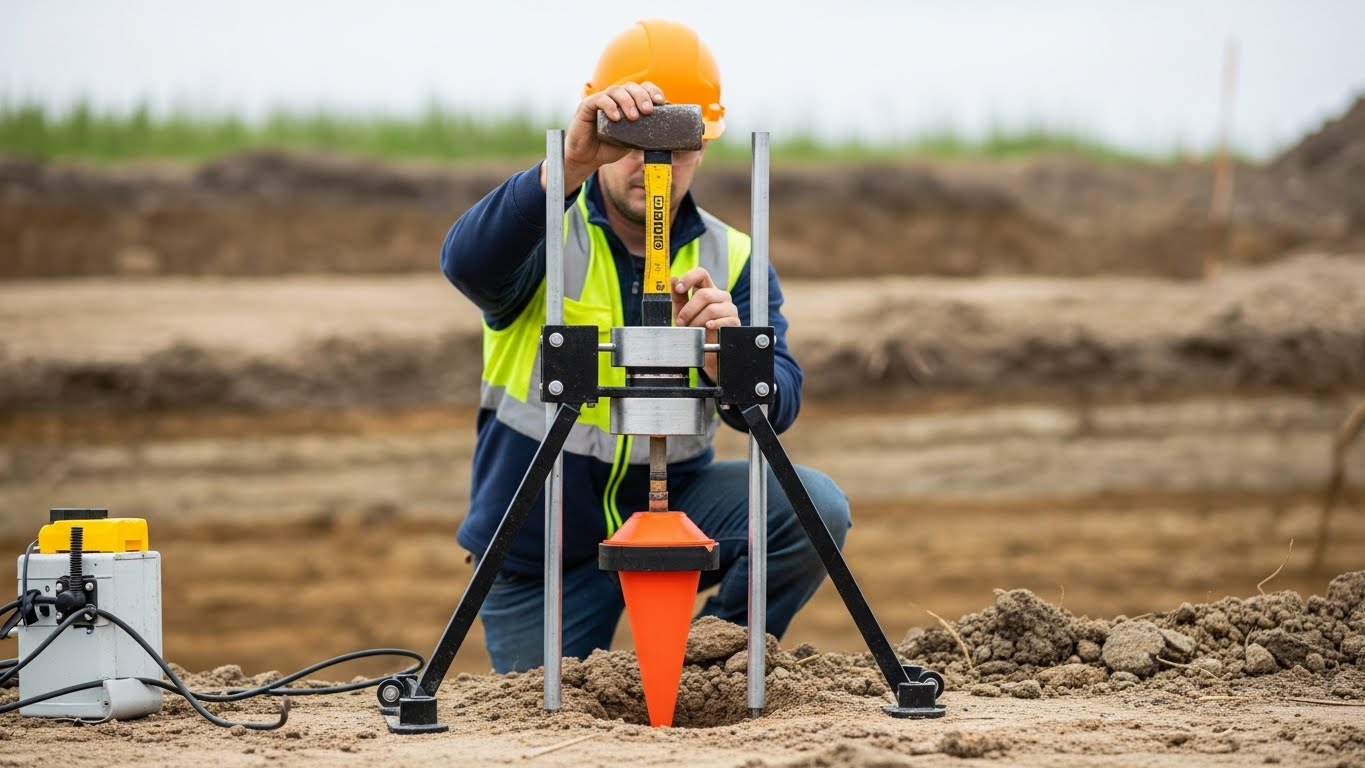
The Core Concept of Workability
Workability describes how easily freshly mixed concrete can be mixed, transported, placed, and compacted without experiencing segregation. A workable mix flows smoothly into the corners of formwork and completely surrounds internal steel reinforcement.
Several physical factors influence this property. The ratio of water to cement is the most dominant variable; adding water increases fluidity but severely penalizes the final compressive strength. The size, shape, and grading of the aggregates also play a massive role. Smooth, round river gravel produces a much more workable mix than angular crushed stone. Furthermore, the inclusion of chemical admixtures, such as superplasticizers, can drastically improve flow without requiring additional water.
The test we are discussing specifically measures the empirical consistency of the concrete. By observing how a molded sample deforms under its own weight, technicians can quickly infer whether the batch possesses the correct level of workability for the intended application.
The Essential Apparatus
Performing the assessment requires a specific set of standardized tools. Using the correct equipment ensures that results are accurate, repeatable, and comparable across different sites and laboratories.
The Metal Cone
The centerpiece of the test is a hollow, frustum-shaped cone made of galvanized steel or another non-absorbent material. By international standards, the cone has a bottom diameter of 200mm, a top diameter of 100mm, and a precise vertical height of 300mm. The cone features two foot-pieces at the base for the operator to stand on, securing it firmly to the ground during the filling process.
The Tamping Rod
Compacting the concrete inside the cone requires a standard tamping rod. This is a straight rod made of steel, typically 16mm in diameter and 600mm long. One end is rounded into a hemispherical tip to ensure it efficiently penetrates the aggregate without simply pushing it downward and leaving voids.
The Base Plate
The test must be conducted on a rigid, flat, non-absorbent, and smooth surface. A dedicated steel or thick plastic base plate provides a stable foundation, preventing ground moisture from altering the mix or uneven terrain from skewing the final measurement.
Measurement Tools
A standard steel ruler or measuring tape is required to determine the exact distance the concrete has subsided. A scoop is also necessary for transferring the fresh material from the wheelbarrow into the narrow top of the cone.
The Step-by-Step Procedure
Accuracy hinges on the operator’s strict adherence to the standardized protocol. Any deviation in how the cone is filled or lifted will invalidate the result.
1. Preparation: Clean the internal surface of the cone and the base plate thoroughly. Dampen both surfaces with a wet cloth to prevent them from absorbing moisture from the concrete. Place the base plate on level ground and position the cone centrally. The operator must stand firmly on the foot-pieces to hold the cone tightly against the plate.
2. First Layer: Using the scoop, fill the cone to approximately one-third of its volume. Using the rounded end of the tamping rod, strike the layer 25 times. The strokes must be distributed uniformly over the cross-section of the mix.
3. Second Layer: Fill the cone to two-thirds of its volume. Tamp this layer another 25 times. The rod should penetrate slightly into the first layer to ensure proper integration between the two.
4. Top Layer: Overfill the cone slightly. Tamp this final layer 25 times, again ensuring the rod penetrates slightly into the underlying layer. If the tamping causes the concrete to subside below the top edge, add more material to keep an excess above the rim.
5. Striking Off: After the final tamping, use the tamping rod in a rolling and sawing motion to strike off the excess concrete perfectly level with the top rim of the cone. Clean away any spilled material from the base plate.
6. The Lift: The operator steps off the foot-pieces while holding the top handles firmly. In a smooth, continuous vertical motion, carefully lift the cone straight up. This action should take between 5 and 10 seconds. Avoid any lateral or twisting movements, as these will disturb the sample.
7. Measurement: Place the empty cone upside down next to the subsided concrete. Lay the tamping rod horizontally across the top of the inverted cone so it extends over the sample. Measure the vertical distance from the bottom of the tamping rod to the highest point of the collapsed concrete. This measurement, recorded in millimeters, is the final result.
Interpreting the Results
The way the concrete behaves after the cone is removed tells the technician exactly what is happening chemically and physically within the mix. There are three primary types of profiles you will observe.
True Slump
In a true slump, the concrete simply subsides evenly, largely retaining its original shape but sinking downward. This indicates a cohesive, well-proportioned mix. It shows that the material is workable but not overly wet, and that the aggregates are properly suspended within the cement paste. This is the desired outcome for the vast majority of structural applications.
Shear Slump
A shear slump occurs when the top half of the cone shears off and slips down a distinct inclined plane. This indicates that the mix lacks cohesion. It is a massive red flag that the concrete is prone to segregation—meaning the heavy aggregates will sink to the bottom while the water and fine cement rise to the top. This often happens in harsh mixes lacking sufficient fine sand or cement. If a shear occurs, the test is considered invalid and must be repeated with a fresh sample. If a second shear occurs, the batch design itself is flawed. To maintain high standards, utilizing reliable laboratory supplies ensures all testing variables are controlled.
Collapse Slump
A collapse slump is exactly what it sounds like: the concrete completely falls apart and spreads outward into a flat puddle. This unequivocally indicates that the mix is far too wet. The water-to-cement ratio is extremely high, meaning the resulting structure will suffer from severe shrinkage cracking, high permeability, and drastically reduced compressive strength.
Optimal Ranges for Various Applications
Different construction scenarios demand different levels of workability. What is perfect for a driveway might be completely unsuitable for a heavily reinforced retaining wall.
- Low (25mm – 50mm): This very stiff mix is ideal for mass concrete foundations, road pavements, and situations where vibratory compaction machinery is heavily utilized. It requires significant mechanical effort to place but offers exceptional strength and durability.
- Medium (50mm – 100mm): This is the most common range for general reinforced concrete, including flat slabs, beams, columns, and residential foundation walls. It flows relatively easily but still requires manual tamping or moderate vibration to eliminate air voids.
- High (100mm – 150mm): This highly fluid mix is necessary for heavily congested areas with dense steel reinforcement, or for deep trenches where manual compaction is impossible. It flows readily into tight spaces but carries a higher risk of segregation if not formulated carefully with chemical admixtures.
Factors Influencing the Outcome
Several variables can drastically alter the workability of a batch, even if the recipe remains identical.
Temperature and Weather: Hot weather accelerates the hydration of cement, causing the mix to lose workability rapidly during transport. High winds and low humidity increase evaporation rates, stiffening the surface.
Time in Transit: The longer the concrete sits in the mixer drum, the stiffer it becomes. Delays on the job site directly translate to a loss of fluidity.
Aggregate Moisture: The sand and gravel used at the batching plant contain natural moisture. If a sudden rainstorm completely soaks the aggregate stockpiles, that excess water ends up in the mix, unexpectedly pushing the consistency into the collapse range.
Best Practices and Troubleshooting
To ensure accurate, reliable data that protects the structural integrity of the project, technicians must adhere to rigorous standards.
Always Use a Base Plate: Never conduct the assessment directly on dry soil or hot asphalt. These surfaces will instantly suck moisture out of the sample, creating an artificially stiff reading. Always use a rigid, non-absorbent base.
Sample Selection: Do not take your sample from the very first or very last portion of the concrete truck’s discharge. These portions are often unrepresentative of the entire load. Take the sample from the middle third of the batch for the most accurate reading.
Time Sensitivity: Concrete begins setting the moment water touches cement. The entire testing procedure, from filling the first layer to lifting the cone, should ideally be completed within a strict two-minute window. Lingering or pausing during the process allows the mix to stiffen, skewing the data.
Equipment Maintenance: Dented cones, bent tamping rods, or rusted base plates create friction that alters how the material subsides. All testing apparatus must be kept perfectly clean, dent-free, and regularly calibrated according to industry standards.
The Evolution of Quality Control
While this traditional method remains the universal standard, modern technology is introducing new ways to monitor workability. Automated sensors installed inside the mixing drums of delivery trucks can now monitor the hydraulic pressure required to turn the drum. By correlating this pressure with known consistencies, the system provides a real-time, continuous estimation of the mix’s fluidity before it even arrives on site.
Despite these advancements, the physical, on-site assessment remains a critical, mandatory step. It provides undeniable, empirical proof of the batch’s quality at the exact moment of placement.
Conclusion
The structural safety, longevity, and aesthetic finish of any concrete project depend entirely on the quality of the material placed into the forms. Verifying the workability of every batch is a fundamental responsibility that cannot be bypassed. By meticulously performing this standardized assessment, adhering to strict protocols, and accurately interpreting the results, construction professionals can confidently reject unsuitable materials, optimize their placement strategies, and guarantee that the final structure meets all engineering specifications. Investing the time to perform this procedure correctly is an investment in the long-term success of the entire build.
Frequently Asked Questions (FAQs)
1. What is the primary purpose of this testing procedure?
The main goal is to measure the consistency and workability of a fresh batch. It provides a reliable indication of the water-to-cement ratio, ensuring the mix is neither too stiff to place properly nor too wet to achieve the required structural strength.
2. Can you perform the procedure on any type of concrete?
It is suitable for medium to high workability mixes. However, it is entirely ineffective for extremely dry mixes (like those used in block manufacturing) or highly fluid self-compacting concrete, which require different specialized testing methods.
3. What does it mean if the top half of the sample slides off at an angle?
This is known as a shear. It indicates a lack of cohesion within the mix, making it highly susceptible to segregation. The test must be repeated, and if it occurs again, the mix design must be immediately re-evaluated.
4. Why must the inside of the cone be dampened before starting?
If the metal is dry, it will absorb water from the concrete sample directly touching it. This creates an artificially dry outer layer, increasing friction against the metal and skewing the final measurement.
5. How many times should I use the tamping rod per layer?
According to international standards, each of the three layers must be tamped exactly 25 times. The strokes must be evenly distributed across the surface area to ensure uniform compaction without excessive segregation.
6. Does weather affect the final measurement?
Yes, significantly. Hot, dry, and windy conditions cause rapid evaporation and accelerated setting, making the mix stiffer. Cold temperatures delay setting, potentially making the mix appear more workable for a longer period.
7. How quickly does the procedure need to be completed?
Time is critical. The entire process, from scooping the first layer into the cone to lifting the cone away, should be executed smoothly and completed within roughly two minutes to prevent premature stiffening.
8. What is the standard size of the cone?
The internationally recognized dimensions are a 200mm base diameter, a 100mm top diameter, and a strict vertical height of 300mm. Any deviations from these dimensions invalidate the results.
9. Why is a specific tamping rod required?
The rod must be 16mm in diameter with a rounded, hemispherical tip. A flat tip would push the coarse aggregate downward and leave air voids, while a sharp tip would simply pierce the mix without compacting it.
10. Can adding a chemical plasticizer change the result without adding water?
Absolutely. Superplasticizers act as chemical lubricants, dramatically increasing the fluidity and changing the test outcome without altering the water-to-cement ratio, thereby maintaining the final compressive strength.
Recent Comments