
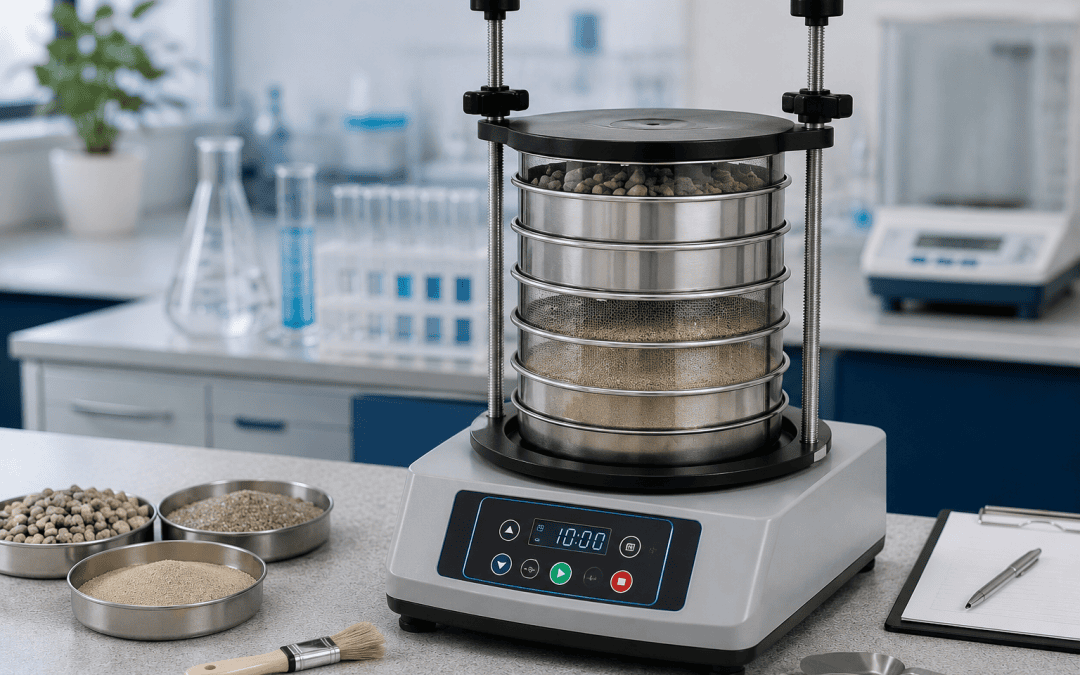
Particle size analysis is an important part of laboratory testing across many industries. The size and distribution of particles can influence the behaviour, quality and performance of materials, so reliable testing is essential when manufacturers, researchers and quality control teams need consistent results. A well-organised sieving process helps technicians understand how a material is graded and whether it meets the required specification.
Traditional hand sieving can work for occasional testing, but it becomes less practical when laboratories handle a large number of samples. Manual shaking can also introduce differences between operators because the movement, pressure and testing time may not always remain consistent. Mechanical equipment provides a more controlled approach, helping laboratories create a repeatable process that is easier to manage during routine testing.
A sieve shaker is designed to make particle separation more consistent by applying controlled movement to a stack of test sieves. As the machine operates, particles move across the mesh, allowing smaller particles to pass through while larger particles remain on the appropriate sieve. This makes it easier to measure the material retained on each sieve and build a clear picture of particle size distribution.
What Is a Sieve Shaker?
A sieve shaker is laboratory equipment used to separate particles according to their size. It normally works with a collection of test sieves arranged in a stack, with larger mesh openings placed above smaller ones. A sample is added to the top sieve, the stack is secured, and the machine applies a controlled shaking motion for a set period.
The movement encourages particles to travel across the mesh surfaces and pass through openings that are large enough for them. Once the test cycle is complete, the material retained on each sieve can be collected and weighed. These measurements can then be used to calculate the percentage of material retained or passing through each sieve, depending on the testing method being used.
The main benefit of mechanical sieving is control. Instead of relying entirely on an operator to produce the same hand movement for every test, the machine provides a more consistent operating pattern. This can be particularly useful for laboratories that need to compare results between samples or carry out testing regularly.
Why Particle Size Analysis Is Important
Particle size can have a direct effect on how a material behaves. In construction materials, for example, the grading of aggregates can influence packing, stability and the performance of mixtures. In soil testing, particle size distribution can help provide useful information about the structure and behaviour of the material.
Powders and granular products can also behave differently depending on particle size. Flow characteristics, handling, mixing and processing may all be affected when a material contains too many fine or coarse particles. Because of this, particle size analysis is often used as part of quality control and product assessment.
Accurate testing also makes it easier to identify changes between batches. If a production process begins creating particles outside the expected range, sieve analysis can help reveal the change. This allows technicians to investigate potential problems before they become larger quality issues.
How the Sieving Process Works
The process normally begins with sample preparation. Depending on the material and the test method, the sample may need to be dried, mixed or otherwise prepared before it is placed into the sieve stack. Careful preparation matters because the quality of the starting sample can affect the accuracy of the final result.
The test sieves are then selected according to the expected particle size range. They are stacked from the largest aperture down to the smallest, with a receiving pan positioned underneath. The sample is placed in the top sieve, and the stack is secured properly before the shaking cycle begins.
During operation, the machine applies controlled movement across the stack. Particles move across the mesh and pass through the openings that are large enough to allow them through. Once the cycle has finished, each sieve can be removed carefully and the retained material weighed for recording and analysis.
Benefits of Mechanical Sieving
One of the biggest advantages of using mechanical equipment is repeatability. A machine can apply the same general movement and operating time to multiple samples, reducing some of the variation associated with manual sieving. This becomes especially valuable when laboratories need consistent results across a large number of tests.
Mechanical sieving can also save time. Instead of an operator manually shaking the sieve stack for every sample, the equipment can run for a selected period while the technician performs other laboratory tasks. This can make routine testing more efficient without requiring more staff time for each individual sample.
Another useful benefit is flexibility. Some equipment allows users to adjust operating settings so that different materials can be tested under suitable conditions. LabQuip’s sieve shaker range includes options with adjustable amplitude and programmable timer functions, which can support different testing requirements. (labquipltd.co.uk)
Choosing the Right Sieve Shaker
The correct machine depends on the laboratory rather than simply its price or size. Before choosing equipment, it is useful to consider the materials being tested, the typical sample volume, the number of tests performed and the sizes of sieves used most frequently. These factors help determine what type of shaker will fit naturally into the existing workflow.
Sieve capacity is another important consideration. A machine needs to hold the required sieve size securely and provide enough capacity for the testing process. LabQuip offers sieve shaker options suitable for standard test sieve sizes from 200 mm to 450 mm, giving laboratories different configurations to consider.
Testing conditions should also be considered. Some materials separate easily under ordinary dry sieving, while others may require a different approach. Where wet sieving is necessary, laboratories should select equipment that is designed to support that type of testing rather than trying to adapt unsuitable equipment.
Features Worth Considering
A useful sieve shaker should provide stable and controlled movement throughout the testing cycle. Adjustable vibration can be valuable because not every material responds in exactly the same way to a fixed movement pattern. The ability to select a suitable amplitude gives technicians greater control over the testing process.
Timer control is another practical feature. When a testing cycle can be programmed in advance, operators do not need to monitor the equipment constantly. Consistent timing also makes it easier to maintain the same procedure when several comparable samples are tested.
The sieve holding system should also be considered carefully. The stack needs to remain secure during operation without creating unnecessary difficulty when sieves are removed. A practical laboratory design should balance stability with ease of use so that equipment can be loaded, operated and emptied efficiently.
Noise can matter as well, particularly in laboratories where staff spend long periods near operating equipment. A quieter setup can create a more comfortable working environment while still providing the movement needed for effective separation. LabQuip highlights low-noise operation among the features available in its sieve shaker range.
Common Applications
Sieve shakers are commonly used where particle size information is needed for material assessment or quality control. Construction laboratories may use them to analyse aggregates, sand and other granular materials. The results can help determine whether a sample matches the expected grading range.
Soil testing is another major application. By separating soil particles according to size, laboratories can obtain useful information about the distribution of coarse and fine material. This information can then form part of broader soil classification and testing procedures.
Industrial and research laboratories can also use mechanical sieving for powders, granules and other materials. When repeated measurements are needed, the controlled movement of a shaker can make the overall process more practical and consistent than repeated manual agitation.
Improving Accuracy During Sieve Analysis
Equipment is only one part of achieving reliable results. The sample itself needs to be representative of the material being tested, otherwise even a well-controlled sieving process may produce misleading conclusions. Proper sampling and preparation should therefore be treated as an essential stage of the procedure rather than an afterthought.
The test sieves also need to be in good condition. Damaged mesh, blocked openings or excessive wear can affect how particles move through the stack. Regular inspection and appropriate cleaning help reduce the chance of these problems affecting a test.
Sample quantity is another consideration. An overloaded sieve may not allow particles to move efficiently across the mesh, which can reduce the effectiveness of separation. Using an appropriate sample size helps maintain better contact between the material and the sieve surface.
Consistency also matters from one test to another. Comparable samples should be tested using the same general procedure, suitable machine settings and controlled test duration. Keeping these factors consistent makes it easier to identify real differences in the material rather than differences caused by the testing process.
Avoiding Common Testing Mistakes
One of the most common mistakes is choosing a sieve range that does not properly cover the expected particle sizes. If important size ranges are missing, the final distribution may not provide enough useful detail. Reviewing the expected characteristics of the material before selecting the sieves can prevent this issue.
Another mistake is placing too much sample into the stack. When a sieve becomes overloaded, smaller particles can struggle to reach the mesh openings, which may affect the result. Following the appropriate test procedure and controlling sample quantities can improve separation.
Inconsistent shaking conditions can also cause problems. Running similar samples for different periods or using significantly different settings makes comparison more difficult. A controlled machine setup can reduce this variation, but only when the laboratory uses a consistent procedure.
Poor cleaning should not be overlooked either. Material left behind from an earlier test can contaminate a new sample or block part of the mesh. Cleaning the sieves and checking them before reuse helps keep the testing process more dependable.
The Importance of Routine Maintenance
Like other laboratory equipment, a sieve shaker benefits from regular inspection and care. Fine particles can accumulate around the machine over time, particularly when it is used frequently. Keeping the equipment clean helps protect moving components and makes it easier to identify visible signs of wear.
Operators should also pay attention to unusual noises, movement or vibration. Changes in normal operation may indicate that a component needs attention. Addressing small issues early can help prevent more significant maintenance problems later.
The sieve stack, clamps and moving parts should be checked regularly to make sure they remain secure and suitable for use. Laboratories may also benefit from keeping simple maintenance records so that servicing and inspection can be planned rather than carried out only when a problem appears.
Calibration and Equipment Checks
Calibration plays an important role where laboratories require controlled and traceable testing conditions. Equipment performance can change gradually through regular use, so periodic checks can help identify whether the instrument is still performing as expected.
Calibration should form part of a wider equipment management process. Laboratories can record servicing, inspection and calibration dates to create a clear history for each machine. This provides a useful reference when checking the reliability of older equipment or planning future maintenance.
LabQuip provides calibration and certification services for laboratory testing equipment, which can support laboratories that need structured equipment checks alongside their testing setup.
Dry Sieving and Wet Sieving
Dry sieving is suitable for many materials, especially when particles are free-flowing and can pass through the mesh without significant difficulty. It is often the most straightforward approach because the material can be separated without adding liquid or requiring additional drying.
Wet sieving may be more suitable for materials containing very fine particles or materials that tend to clump together. Water can assist the movement of smaller particles through the mesh when dry separation does not provide an effective result. The choice between dry and wet methods should always reflect the material and the applicable testing procedure.
The equipment needs to support the selected method. A laboratory should therefore consider whether it regularly performs dry tests only or expects to carry out wet sieving before choosing its equipment. Selecting a setup based on actual testing needs can help avoid unnecessary limitations later.
Making Sieve Testing More Efficient
A good testing workflow starts with preparation. Having the correct sieves, sample containers, weighing equipment and recording process ready before the machine is loaded can reduce delays between tests. This becomes increasingly important when a laboratory needs to process many samples during a single working day.
Standardising the testing procedure can also improve efficiency. Clear instructions for sample preparation, sieve selection, shaking duration and weighing make it easier for different technicians to follow the same approach. This can support both consistency and training.
Equipment placement matters too. A shaker should be positioned in a suitable area where technicians can safely load the sieve stack and remove samples after testing. Keeping related equipment nearby can reduce unnecessary movement and help create a smoother laboratory workflow.
When Should a Laboratory Upgrade Its Equipment?
Older equipment does not necessarily need replacing simply because it has been used for several years. However, there are signs that an upgrade may be worth considering. Frequent breakdowns, inconsistent operation, limited capacity or difficulty obtaining suitable support can all create unnecessary disruption.
A laboratory may also outgrow equipment as its testing requirements change. If sample numbers increase or new materials need to be tested, a machine that was suitable in the past may no longer be the best fit. Reviewing capacity and features before problems become urgent can make equipment upgrades easier to manage.
Newer equipment may also offer more convenient controls, better operating flexibility or features that improve the day-to-day testing process. The goal should not simply be to buy newer equipment, but to choose a setup that solves genuine workflow or testing limitations.
Supporting Better Laboratory Results
Reliable particle size analysis comes from combining good equipment with a controlled testing method. A mechanically operated sieve shaker can help create more consistent movement, but the laboratory still needs to select the correct sieves, prepare samples carefully and follow an appropriate procedure.
Maintenance and calibration are equally important because equipment performance should remain dependable over time. When these factors are managed together, the laboratory can build a testing process that is easier to repeat and easier to monitor.
For laboratories reviewing their current setup, it can be useful to consider both present requirements and expected future workloads. Choosing equipment that offers suitable capacity and useful adjustment options can help ensure that the testing system remains practical as the laboratory develops.
Why LabQuip Can Be Considered
Selecting laboratory equipment is about more than finding a machine that performs the basic function. Product suitability, technical support, calibration and long-term usability can all influence the value of an investment. Having access to relevant testing equipment and support can make the selection process more straightforward.
LabQuip supplies laboratory testing equipment, including sieve shakers and test sieves, with options designed for different testing applications. Its range includes different capacities and configurations, while its services also cover areas such as equipment installation and calibration.
Conclusion
Particle size testing plays an important role in understanding the quality, grading and behaviour of many different materials. While manual sieving may be suitable for occasional use, mechanical equipment can make repeated testing more consistent, efficient and manageable. The right sieve shaker can provide controlled movement, reliable timing and better repeatability across routine laboratory work.
Choosing the right system requires more than looking at machine size or price. Laboratories should consider their materials, sample volumes, sieve sizes, testing methods and future requirements before selecting equipment. Regular cleaning, maintenance, calibration and consistent testing procedures are also essential for achieving dependable results.
With the right approach, sieve analysis can become a more efficient part of the laboratory workflow rather than a time-consuming manual task. For laboratories looking to improve their setup, LabQuip offers sieve shakers, test sieves and related laboratory testing equipment designed to support a range of particle size analysis needs.
Recent Comments